
What went into our project?
- Selecting Sources
- Processing Data
- Presenting our work
Selecting Sources
Our group worked with six datasets from the U.S. Bureau of Economic Analysis (BEA) Travel and Tourism Satellite Account (TTSA), covering the years 2018 through 2023. The TTSA is a federal statistical framework used to measure the economic contribution of tourism-related industries to the U.S. economy. BEA releases these datasets annually to provide insight into how sectors such as travel accommodations, food and beverage services, transportation, entertainment, and sightseeing activities contribute to national economic output. These data tables are widely used in research, public policy, and industry planning because they offer a standardized, long-term measurement of trends in both leisure activities and mobility-related services.
In addition to the TTSA datasets, we incorporated international arrival data from the National Travel and Tourism Office (NTTO), released by the U.S. Department of Commerce in the 2023 International Travel Statistics report.
This dataset provides global-scale insights into inbound and outbound international travel patterns, including visitor volumes, country-level tourism flows, and post-pandemic recovery rates. It allowed us to contextualize U.S.-based economic changes within a broader global mobility pattern, helping us examine how international travel demand shifted before, during, and after COVID-19.
We chose this dataset because it directly supports our research question: How did shifts in travel data mirror changing cultural attitudes toward leisure and mobility after COVID-19? By using multiple years of data, we were able to compare three distinct periods: before the pandemic (2018–2019), during the pandemic (2020–2021), and after widespread reopening (2022–2023). We made a temporal range to trace not only economic disruptions but also patterns of recovery and adjustment, which reflect broader cultural changes in comfort, risk perception, and the meaning of leisure.
The six tables we used included values for Gross Output and Gross Domestic Product by Industry, along with additional measures related to transportation and entertainment sectors. These datasets are originally formatted with complete national economic data for all industries, so our first major step was data cleaning. We filtered out non-tourism sectors, standardized industry naming across different yearly tables, and grouped industries into meaningful categories that aligned with our research focus: Leisure, Leisure & Mobility, and Mobility. For example, sectors like “Traveler accommodations,” “Food and beverage services,” and “Motion pictures and performing arts” were categorized under leisure, while transportation sectors such as “Domestic air travel,” “Urban transit,” and “Taxi services” were grouped under mobility.
After standardizing and organizing the data, we structured it so that each selected industry contained three comparable values: its economic output before, during, and after the pandemic. We restructured it to create visualizations illustrating how some industries, like domestic air travel and spectator sports, suffered deep declines and slow recovery, while others, such as recreational vehicle rentals and outdoor-oriented sightseeing tourism, rebounded more quickly. There are differences that highlight how cultural attitudes toward travel shifted from prioritizing safety and isolation to gradually returning to communal and experiential leisure activities.
Dataset Used: U.S. Bureau of Economic Analysis (BEA). Travel and Tourism Satellite Account (TTSA), 2018–2023.
Processing Data
After gathering six datasets from the U.S. Bureau of Economic Analysis (BEA) Travel and Tourism Satellite Account (TTSA) for the years 2018 through 2023, we began by filtering and organizing the data to focus exclusively on tourism-related industries. The original TTSA tables included national-level statistics for all sectors of the economy, so our first step was to remove non-tourism industries and retain only those directly connected to travel, accommodation, food services, entertainment, and transportation.
We also processed the NTTO international travel dataset to extract country-level visitor arrival trends for 2018–2023.
This required cleaning irregular numeric formats, standardizing country names, and aligning the data with the same three time periods used in the TTSA analysis (pre-, mid-, and post-COVID). We then compared global arrival patterns with U.S. domestic tourism output to look for parallel or divergent recovery trends.
We standardized industry names across all years to ensure consistency and comparability. Each dataset was restructured to highlight three distinct periods—before the pandemic (2018–2019), during COVID-19 (2020–2021), and after reopening (2022–2023). To make the dataset more intuitive and aligned with our research focus, we grouped related industries into three categories: Leisure, Leisure & Mobility, and Mobility. For instance, “Traveler accommodations,” “Food and beverage services,” and “Motion pictures and performing arts” were grouped under Leisure, while transportation sectors like “Domestic air travel” and “Urban transit” were categorized under Mobility.
For data transformation and preparation, we primarily used R (Tidyverse) for data wrangling and reshaping, along with Python (Pandas) for verification and Tableau for initial visual testing. Each tool contributed differently to our workflow: R made it easy to reorganize variables and merge tables across years, Python ensured data accuracy and allowed for flexible computation, and Tableau enabled us to preview how our structured dataset would translate visually.
Through this processing phase, we created a clear and comparable dataset that visually demonstrates how tourism-related outputs change over time. These adjustments allow our visualizations to clearly show how some industries experienced sharp declines and slow recovery, while outdoor activities such as sightseeing and car rentals showed a faster rebound, revealing how cultural attitudes towards leisure and recreation have shifted post-pandemic.
Presenting Our Work
Since our team has only just begun working on the project, we have not yet started building the website. Our current plan is to use WordPress to develop the site, as it offers flexible design options and an accessible interface that will help us organize our narrative effectively. For data visualizations, we will use Tableau to create clear and consistent charts that highlight the trends we identified in the Travel and Tourism Satellite Account (TTSA) datasets.
As we continue developing the website, our goal is to design a layout that is easy to navigate and visually engaging, allowing users to follow how leisure and mobility patterns shifted before, during, and after COVID-19. While our design choices may evolve throughout the process, we aim for the final site to be visually clear, intuitive to explore, and accessible to a wide audience.
We plan to experiment with different layouts, color schemes, and visual formats to find the presentation style that best suits our theme. Each visualization will be accompanied by a brief description to help visitors understand how economic patterns in the TTSA data relate to broader cultural changes in travel behavior, comfort, and leisure activities. In integrating charts, text descriptions, and supporting visual elements, our primary goal is to create an online space where the data is intuitive and closely connected to the overarching theme of the transformation of travel culture during the pandemic.
Meet Our Team
Irene Hwang

Project Manager / Web Designer
Hi, I’m Irene, a fourth-year Cognitive Science major, specializing in Computing. I’m interested in machine learning, data analysis, and UX research, and I enjoy finding ways to communicate insights clearly through structured planning and thoughtful design decisions. In my role as Project Manager, I defined the research direction, facilitated group communication, and guided the team through the data cleaning and visualization process. With a strong focus on clarity, I made sure that the team’s work remained aligned and that the final project communicated meaningful insights.
Jing Wang

Data Specialist / Web Designer
Hi, my name is Jing and I’m a third-year Statistics and Data Science major. I’m excited to learn how to turn data into stories that people can connect with. I’m especially interested in how visual storytelling can make complex information feel more intuitive and meaningful. In this project, I’ll be helping design and organize visual elements that link our data analysis with a clear and engaging narrative. Through this process, I hope to discover how thoughtful design can make data not only informative, but also emotionally resonant and inspiring.
Jiarui Wang

Web Designer
Hi, this is Peter. I’m a fourth-year majoring in Statistics and Data Science with a minor in Mathematics. For this project, I’m responsible for data integration, cleaning, and web development. Our goal is to uncover the non-trivial or latent relationships between COVID and spending patterns. While the general connection between these two factors may seem straightforward, we aim to use data-driven analysis to either validate common assumptions or reveal deeper, hidden insights. In addition, I believe that clear and rational data presentation plays a key role in effective communication and public understanding. It has been a great experience collaborating with my teammates and seeing our work come together.
Audrey Lu
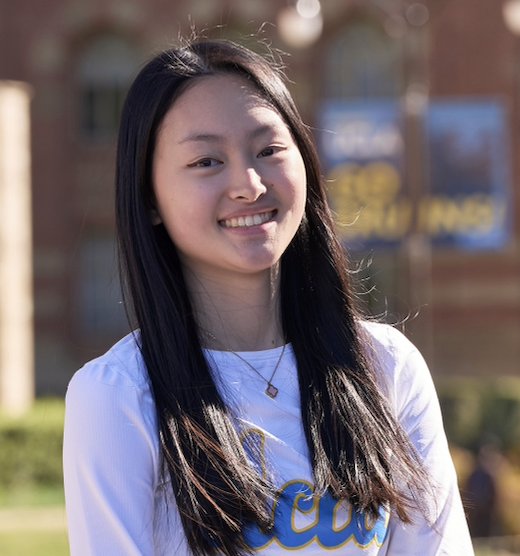
Data Visualization Specialist / Content Strategist
Hi! I’m Audrey, a fourth-year Statistics and Data Science major with a Digital Humanities minor. I am passionate about turning data into clear, actionable visualizations that make insights easy to understand. As a Data Visualization Specialist, I have experience with tools such as Tableau and Power BI, managing the full process from integrating data into visualization platforms to designing charts, graphs, maps, and dashboards that are clean, understandable, and top-tier. Also, as a Content Strategist, I shape the narrative behind them, determining where each visualization belongs, how information should be organized, and how insights are best communicated. My goal is not only to make data accessible, but also actionable and strategically meaningful.
Vlad Plyushchenko

Content Developer
Hi! I’m Vlad – a third-year computer science major from London. I’m interested in programming and analyzing fiscal trends or cycles. My main role will be overlooking the authoring of the content on the website we will make.
Nick Nugent

Editor
Hello! I’m Nick and I’m a third-year Sociology major, specializing in computational sociology. As the editor I’m in charge of overlooking the project and confirming that all elements are present. For this project, I’m especially excited because I’m working with some very talented peers. Overlooking a dense project like this will allow me to hone in on my skills and improve my ability to build and edit databases.